
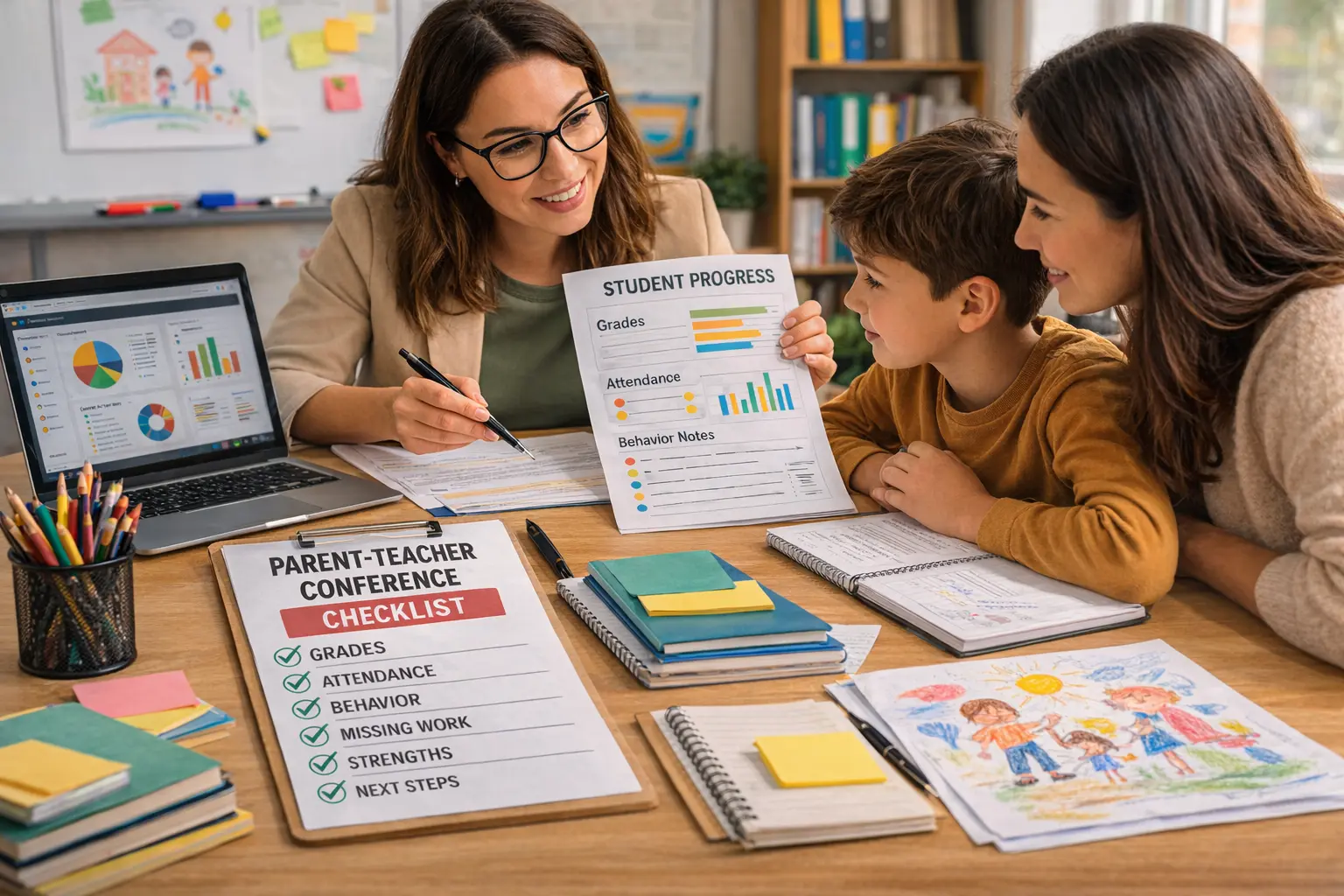
Parent-Teacher Conference Checklist: 9 Smart Ways Teachers Can Bring the Right Data Every Time
Parent-teacher conferences work best when teachers come prepared with clear, organized facts. Without that preparation, conversations can drift into vague impressions, mixed emotions, and general comments that do not help families understand what is really happening. Parents usually want specifics. They want to know how their child is doing in class, what is going well, what is causing concern, and what needs to happen next.
That is why a strong Parent-Teacher Conference Checklist matters so much. When teachers bring the right information about grades, attendance, behavior, and missing assignments, the meeting becomes more useful for everyone. Instead of guessing, both sides can talk about real patterns, recent examples, and practical next steps. A good conference is not just a status update. It is a problem-solving conversation built on facts.
Introduction
Parent-teacher conferences are still one of the most common ways schools connect directly with families. According to the National Center for Education Statistics (NCES), parents or guardians of 72% of K–12 students reported attending a regularly scheduled parent-teacher conference during the 2022–23 school year. That number alone shows how important these meetings remain in real school communication, not just in theory.
Many conferences feel less effective than they should because the teacher arrives with general thoughts but without clearly prepared data. That can make the conversation sound like, “Your child is doing okay,” or “There have been some issues lately,” without enough detail to explain what those statements actually mean.
Parents usually do not want broad comments alone. They want concrete information. They want to know whether the grade has dropped, whether assignments are being missed, whether attendance is affecting progress, and whether classroom behavior is helping or hurting learning. When these details are missing, the conversation can become frustrating. Parents may leave confused, teachers may feel rushed, and the student may not get a clear support plan.
A productive conference is built on facts. It should include a clear picture of current grades, attendance records, behavior patterns, classroom habits, and missing work. When those pieces are ready ahead of time, the meeting becomes focused, calm, and much more helpful.
Why Preparation Matters Before a Parent-Teacher Conference
Preparation changes the tone of the entire meeting. When a teacher is organized, the conference feels more professional from the first minute. Instead of searching through papers or trying to remember details from memory, the teacher can lead the discussion with confidence.
Prepared data also helps remove unnecessary emotion from the conversation. Emotions are natural in any meeting about a child, but facts help keep the discussion grounded. A grade report, attendance record, or sample assignment gives both sides something real to look at. That makes it easier to talk about concerns without making the meeting feel personal or defensive.
This matters because family engagement is not just a “nice extra.” Research summarized by the Institute of Education Sciences (IES) links parent involvement and family-school partnerships with stronger academic performance, better self-regulation, improved homework and study habits, more positive attitudes toward school, and fewer discipline problems. In other words, when conferences are prepared well, they support outcomes that matter.
Another reason preparation matters is that parents respond better to specific examples than to general statements. Saying, “Your child struggles with organization,” is less useful than saying, “Three assignments were turned in late this month, and two were missing completely.” That level of detail makes the issue easier to understand and easier to solve.
Good preparation also leads to better endings. Too many conferences finish with concern but no clear plan. When teachers bring organized information, they are more likely to leave parents with practical next steps. That may include improving attendance, checking homework weekly, setting deadlines at home, or monitoring missing work more closely. In other words, preparation turns a conversation into action.
What Data Teachers Should Bring to a Parent-Teacher Conference
Teachers do not need to bring every document they have ever collected about a student. That would be overwhelming. The goal is to bring the most important information that gives a clear and balanced picture of the student’s current performance and classroom experience.
The best conference data usually falls into six core categories: grades, missing and late work, attendance, behavior and classroom habits, work samples, and intervention notes. Together, these show what is happening, why it may be happening, and what support has already been tried.
Current Grades and Overall Academic Performance
Current grades should be one of the first things a teacher brings to the meeting. Parents want to understand where their child stands right now, not just how things looked several weeks ago.
A helpful grade summary may include:
- current course grade
- recent test or quiz scores
- homework and classwork trends
- major project results
- overall academic strengths
- areas where performance has declined
This information helps parents see the full picture. Maybe the student is doing well in reading but struggling in math. Maybe the overall grade is lower than expected because of recent tests rather than daily work. Maybe the student understands class discussions but is not showing that understanding on written assignments.
It is also important to mention strengths, not just concerns. Parents should hear what the student is doing well. That might include strong participation, improvement in writing, steady quiz performance, or solid problem-solving skills. Starting with strengths creates a more balanced and constructive discussion.
Missing and Late Assignments
Missing and late assignments often explain more than parents realize. A student may seem capable in class but still have a low grade because work is not being submitted on time. That is why teachers should bring a simple record of:
- missing assignments
- late assignments
- repeated patterns over time
- whether missing work is affecting the final grade
This part of the conversation is especially useful because it turns a vague problem into something visible. Rather than saying, “Your child needs to be more responsible,” the teacher can point to a clear pattern. For example, perhaps most missing assignments happen after long weekends, during larger projects, or in one particular subject area.
That kind of detail opens the door to better solutions. The issue may be time management, misunderstanding directions, lack of organization, or inconsistent follow-through. Once the pattern is clear, families and teachers can respond more effectively.
Attendance Records
Attendance matters because students miss more than a seat in the room when they are absent. They miss instruction, directions, practice, and classroom discussion. Even repeated tardiness can cause problems, especially when it affects the beginning of lessons, warm-up tasks, or important instructions.
Teachers should be ready with:
- total absences
- recent absences
- patterns of lateness
- repeated attendance concerns
- signs that attendance is affecting learning
This section should stay factual and respectful. Sometimes attendance issues are connected to family circumstances, health concerns, transportation problems, or other sensitive issues. Still, it is important to explain the academic impact clearly.
A strong data point helps here: Attendance Works defines chronic absence as missing 10% or more of school days for any reason, including excused absences, unexcused absences, and suspensions. The same organization connects chronic absence to weaker reading outcomes, lower middle school achievement, and reduced chances of graduating on time. That makes attendance a core academic signal, not just an administrative number.
Behavior and Classroom Habits
Behavior data should go beyond discipline alone. In many conferences, the more helpful discussion is about classroom habits rather than major behavior incidents. Teachers may want to bring notes about:
- participation in class
- ability to stay focused
- organization and preparedness
- following instructions
- working independently
- interacting with classmates
- responding to feedback
This makes the conversation more useful than simply labeling a student as “good” or “disruptive.” Maybe the student is kind and respectful but often off task. Maybe the student participates a lot but struggles to listen to others. Maybe there are no major behavior problems, but weak organization is hurting academic progress.
When possible, teachers should describe patterns rather than one isolated event. Parents benefit more from hearing, “I’ve noticed your child often needs reminders to begin work,” than from hearing about a single rough day.
Work Samples and Real Examples
One of the most effective things a teacher can bring is a small set of real student work. A conference becomes much easier when parents can actually see the difference between strong work and work that needs improvement.
Useful examples include:
- one or two strong assignments
- one or two assignments showing concern
- recent work that reflects current performance
- tasks that show effort, accuracy, or skill gaps
These samples help explain the student’s level in a concrete way. A strong paragraph, a weak math response, or an incomplete project tells a clearer story than a general summary ever could. Work samples also make it easier to discuss expectations. Parents can see where the student is succeeding and where improvement is needed.
Intervention Notes or Support Already Provided
Families should know what support has already been given before the conference. This shows that the teacher has not simply noticed a problem but has already taken steps to help.
Bring notes about:
- strategies already tried
- extra help already offered
- communication already sent home
- accommodations or supports already in place
- what helped
- what did not work yet
This part of the meeting is powerful because it moves the conversation from blame to collaboration. It shows that the school and family are on the same side. It also prevents confusion. Parents can better understand whether the issue is new, ongoing, improving, or still unresolved.
How to Organize the Information Before the Meeting
Collecting data is only half the job. The other half is organizing it so the meeting stays focused and easy to follow. A teacher who brings too much information can overwhelm parents and themselves. A teacher who brings too little can miss key points.
A simple system works best. Keep all relevant data in one place, whether that is a digital dashboard, printed report, student folder, or conference form. Then narrow the discussion to two or three main topics that matter most right now. That keeps the meeting clear and manageable.
A very effective order is:
- strengths
- concerns
- next steps
This structure works because it begins with balance, moves into the real issues, and ends with action. It helps parents stay engaged rather than discouraged. It also helps teachers avoid jumping from one topic to another without a clear path.
Questions Parents Commonly Ask During Conferences
Parents often come to conferences with the same core questions. Teachers who prepare for these questions can respond more clearly and with greater confidence.
How is my child doing overall?
This is often the first question, and it deserves a balanced answer. Teachers should be ready to summarize academic performance, classroom behavior, and work habits in a few clear sentences. The goal is to give a broad picture without sounding too vague.
Why is the grade lower than expected?
This question usually needs a direct, evidence-based answer. The grade may be lower because of missing assignments, poor test performance, weak writing, incomplete classwork, or attendance-related learning gaps. Specific examples make the explanation stronger.
Are missing assignments the main issue?
Sometimes yes, sometimes no. Missing work may be the biggest cause of a low grade, or it may be just one part of a larger issue. Teachers should be able to explain whether missing assignments are the central problem or whether understanding, effort, and attendance also play a role.
Is attendance affecting learning?
When attendance is inconsistent, the answer is often yes. Students may miss direct instruction, class practice, or guided support. Even strong students can fall behind when they miss too much classroom time.
Is behavior part of the problem?
This should be handled carefully. Behavior may be part of the issue, but it should be described in terms of learning habits and classroom patterns whenever possible. A calm explanation is much more effective than a harsh label.
What can we do at home?
Parents usually appreciate practical ideas. Teachers can suggest checking assignment platforms weekly, setting a regular homework routine, encouraging earlier bedtime for better attendance, or reviewing missing work every Friday.
What should improve before the next conference or report card?
This is where goals matter. The best answer includes measurable changes such as fewer missing assignments, stronger attendance, improved test preparation, or better daily participation.
Common Mistakes Teachers Should Avoid
Even experienced teachers can make conference mistakes. The good news is that most of them are preventable.
One common mistake is showing up without data. This weakens the teacher’s message and makes the meeting feel unprepared. Another mistake is speaking too generally. Comments like “needs to try harder” or “has potential” may be true, but they do not help much without examples.
A third mistake is discussing too many problems at once. Parents can leave overwhelmed if every small issue gets equal attention. It is usually better to focus on the most important patterns first.
Teachers should also avoid focusing only on weaknesses. A conference should be honest, but it should also be balanced. Mentioning strengths builds trust and shows that the student is seen as a whole person, not just a list of problems.
Other mistakes include:
- not showing real examples
- speaking in overly technical language
- making assumptions without evidence
- ending the meeting without clear next steps
The best conferences feel specific, respectful, and solution-oriented.
Parent-Teacher Conference Checklist for Teachers
Here is a practical Parent-Teacher Conference Checklist that teachers can use before the meeting:
- current grade summary
- recent test, quiz, or assignment scores
- missing assignments list
- late work record
- attendance record
- tardy history
- behavior or classroom habit notes
- one or two student strengths to mention
- one or two main concerns to discuss
- work samples showing strengths
- work samples showing problem areas
- notes on interventions already tried
- next steps for school
- next steps for home
This checklist helps teachers walk into the meeting prepared, focused, and ready to lead a productive discussion.
How Digital Tracking Tools Make Parent-Teacher Conferences Easier
Preparing for conferences can be hard when grades, attendance, behavior notes, and intervention details are spread across different systems. A teacher may need to check a gradebook, an attendance platform, a notebook of classroom observations, old emails, and printed assignments just to prepare for one short meeting. That is a lot of extra work.
This challenge makes even more sense when you look at how school-family communication actually happens. NCES reports that, during the 2022–23 school year, parents or guardians of 66% of students received emails or notes specifically about their child, and 41% received phone calls about their child from school or teachers. When communication already flows through multiple channels, pulling together a complete conference picture manually becomes even harder.
A unified digital system makes conference preparation much easier. When key student information lives in one place, teachers can see the whole picture faster. That saves time, reduces stress, and makes it easier to spot patterns before the conversation even begins.
Digital tools can help teachers:
- review grades and missing work quickly
- track attendance patterns over time
- keep behavior notes organized
- store intervention history in one place
- prepare follow-up steps after the conference
This is where a platform like Lekktura fits naturally into the process. When grades, attendance, behavior, and teacher notes are connected in one system, it becomes much easier to prepare for parent-teacher conferences in a smart and efficient way. Instead of pulling information from scattered places, teachers can focus on what matters most: explaining the student’s progress clearly and creating a useful plan with families.
Schools that want to strengthen family engagement can also look at guidance from the U.S. Department of Education. Its parent and family engagement guidance describes conferences as one example of meaningful school-family engagement, and it explains how Title I districts set aside family-engagement funds under federal rules. That broader policy context reinforces the idea that conferences are not just routine events; they are part of a larger engagement strategy.
Final Thoughts
A strong parent-teacher conference does not happen by accident. It is built on preparation. When teachers bring the right data, the conversation becomes more useful, more focused, and more productive. Grades, attendance, behavior, missing assignments, work samples, and intervention notes all help create a complete picture of the student.
A practical checklist gives teachers confidence. It helps them stay organized, speak clearly, and guide the meeting toward solutions instead of vague concerns. It also helps parents understand what is happening and what they can do next.
And the larger research picture supports this approach. Family-school engagement is linked to stronger student outcomes, while attendance patterns and missing work often reveal risks that teachers should address early. Conferences become far more effective when they are based on evidence, not memory alone.
In the end, the most effective conferences are the ones built on facts, balance, and a clear action plan. That is exactly why a reliable Parent-Teacher Conference Checklist can make such a big difference for teachers, families, and students alike.


