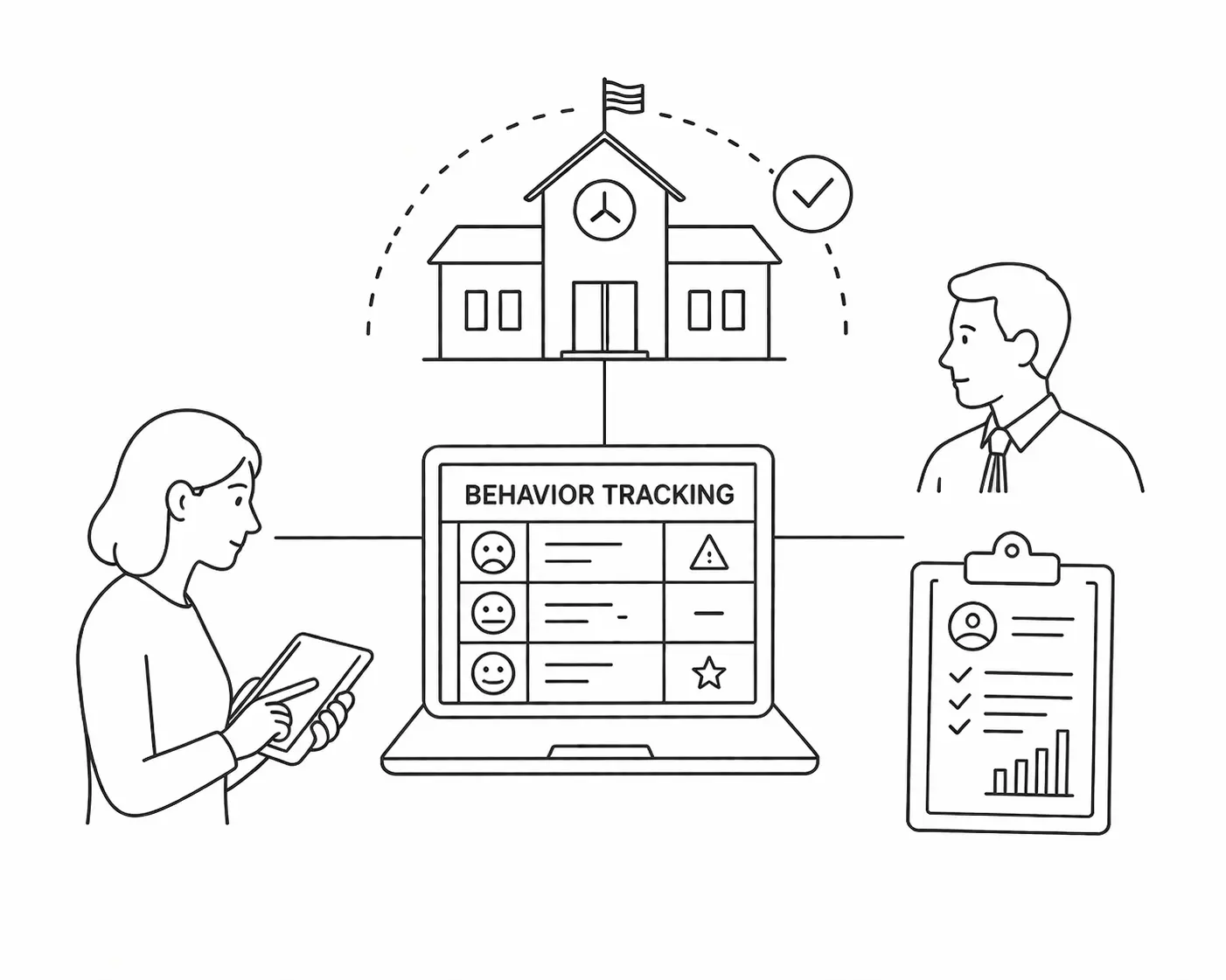

Tracking student behavior effectively helps teachers do more than document disruptions. It makes it easier to spot patterns, support students earlier, communicate clearly with families, and keep classroom records organized. When behavior tracking is done well, it becomes a practical classroom management tool rather than just extra paperwork.
Try Free Teacher Behavior Tracker ->
Quick answer
To track student behavior effectively, teachers need a simple system that is consistent, specific, and easy to update. The best approach is to decide what behaviors matter most, record them using clear language, review trends regularly, and use the information to guide interventions and communication.
In other words, effective behavior tracking is not about writing down everything. It is about recording the right things in a way that is useful later.
What effective student behavior tracking really means
Student behavior tracking is the process of documenting observable classroom behaviors over time. This can include positive behavior, disruptions, refusal to work, missing materials, peer conflict, participation, emotional regulation, and other patterns that affect learning.
The goal is not to label students. The goal is to create clear, factual records that help answer important questions such as:
- Is this behavior happening often or only occasionally?
- Does it happen at a certain time of day?
- Does it happen during one subject more than others?
- Is the behavior improving, staying the same, or getting worse?
- What support might help this student succeed?
Good tracking turns vague impressions into usable information.
Why behavior tracking matters in the classroom
Without a system, teachers often rely on memory. That is where problems begin. It becomes harder to remember exactly when something happened, how often it happened, or whether the issue is actually a pattern.
Effective behavior tracking helps teachers:
- identify recurring issues early
- notice sudden changes in student behavior
- document concerns before parent meetings or referrals
- support RTI, MTSS, or intervention discussions
- keep communication factual and professional
- recognize positive growth, not just problems
It also protects teachers. Clear records are much stronger than general statements like “this happens all the time.”
What to track
One of the biggest mistakes teachers make is trying to track too much. A better approach is to focus on behaviors that are frequent, important, or directly connected to learning and classroom functioning.
Common categories include:
Academic behavior
- incomplete work
- refusal to start tasks
- off-task behavior
- lack of participation
- repeated missing assignments
Classroom conduct
- calling out
- disruption during instruction
- leaving seat without permission
- arguing
- not following directions
Social and emotional behavior
- conflict with peers
- emotional outbursts
- withdrawal
- frustration tolerance
- difficulty with transitions
Positive behavior
- helping classmates
- staying on task
- improved self-control
- consistent participation
- meeting behavior goals
Tracking positive behavior matters too. It gives a fuller picture and makes it easier to reinforce progress.
How to track student behavior effectively
1. Choose a simple system
Your system should be easy enough to use during a real school day. If it takes too long, you will stop using it.
A simple system may include:
- student name
- date
- time
- behavior observed
- context
- action taken
- follow-up notes
This can be done on paper, in a spreadsheet, or in a digital behavior tracker. The best system is the one you will actually use consistently.
2. Be specific and objective
Write what you saw, not your interpretation of the student’s character.
Instead of:
- rude
- disrespectful
- lazy
- bad attitude
Write:
- interrupted teacher 4 times during directions
- refused to begin independent work for 12 minutes
- pushed chair loudly and left group without permission
- argued with peer during partner activity
This makes your records clearer, more professional, and more useful in meetings.
3. Record context, not just the behavior
Behavior rarely happens in isolation. Context often explains the pattern.
Useful context may include:
- subject or activity
- time of day
- seating arrangement
- peer interaction
- transition period
- substitute day
- test or assignment pressure
For example, “called out repeatedly during math small group” is much more useful than “disruptive.”
4. Track patterns over time
One isolated behavior may not mean much. Repeated behavior often does.
Look for patterns such as:
- every Monday morning
- during independent reading
- after lunch
- during transitions
- when working with a specific peer
- when tasks become more difficult
Pattern detection is where behavior tracking becomes truly valuable. It helps teachers move from reaction to strategy.
5. Include what you did in response
A strong behavior note includes not only what happened, but also what action you took.
Examples:
- redirected student verbally
- moved seat
- provided behavior reminder
- allowed cooldown break
- contacted family
- assigned reflection sheet
- referred to counselor or administrator
This shows that the record is part of an instructional response, not just documentation.
6. Review the data regularly
Behavior tracking only works if you review it.
A quick weekly review can help you answer:
- Which students need support right now?
- Which behaviors are increasing?
- What interventions seem to help?
- Which students are showing improvement?
- What should be discussed with families or support staff?
Even 10 minutes per week can make a big difference.
Example of effective behavior tracking
Imagine a teacher notices that one student has become more disruptive.
Weak note:
- Student was disrespectful again.
Better note:
- March 12, 10:15 AM, math workshop. Student interrupted instruction 5 times, left seat twice without permission, and argued when redirected. Moved student to independent desk and checked in after activity. Similar behavior noted in math on March 8 and March 10.
The second note is stronger because it is factual, specific, and useful later.
Paper vs digital behavior tracking
Paper tracking can work for some classrooms, especially for quick notes. But digital tracking is usually easier to manage over time.
With a digital system, teachers can:
- find records faster
- review student history more easily
- organize notes by date or student
- identify patterns more quickly
- keep documentation in one place
- reduce lost papers and scattered notes
That is especially helpful for teachers managing multiple classes, multiple subjects, or ongoing parent communication.
Common mistakes to avoid
Tracking only negative behavior
If you only log problems, your records become unbalanced. Positive behavior notes help show progress and make communication more constructive.
Writing vague notes
Words like “disrespectful” or “difficult” are too broad. Use observable details.
Being inconsistent
Behavior tracking loses value when it is only done occasionally. A simple consistent system is better than a perfect system used once a month.
Recording too much
Trying to note every small issue creates overload. Focus on behaviors that matter most.
Never reviewing the notes
If you collect data but never use it, the system becomes busywork.
Best practices for teachers
If you want your behavior tracking system to stay useful, follow these best practices:
- keep entries short and factual
- use the same format every time
- track both concerns and improvements
- review notes weekly
- connect behavior notes to classroom interventions
- keep records professional and parent-ready
- use one central place for documentation
Consistency matters more than complexity.
When behavior tracking becomes especially important
Behavior tracking is especially helpful when:
- a student’s behavior is changing suddenly
- families need regular updates
- support staff ask for documentation
- patterns are affecting academic performance
- you are preparing for intervention meetings
- multiple teachers need consistent records
In these situations, organized documentation saves time and improves decision-making.
A practical workflow that works for busy teachers
A realistic teacher workflow might look like this:
- Choose 3 to 5 behavior categories to focus on.
- Record quick factual notes during or right after class.
- Include context and response.
- Review notes once a week.
- Use patterns to decide next steps.
- Share clear information when needed with families or support teams.
That is enough to make behavior tracking useful without making it overwhelming.
A simpler way to stay organized
If you are tracking behavior in random notebooks, sticky notes, or scattered spreadsheets, it becomes hard to stay consistent.
Using one organized system for classroom records can make the process much easier. For teachers who want a more practical way to document behavior, keep records searchable, and review student patterns over time, Lekktura’s Teacher Behavior Tracker gives you one place to manage it clearly and efficiently:
https://lekktura.com/features/teacher-behavior-tracker
Conclusion
Learning how to track student behavior effectively is really about building a system that is clear, consistent, and useful. The best behavior tracking methods help teachers notice patterns, respond earlier, document professionally, and support students more effectively.
You do not need a complicated framework. You need a system you can actually maintain during a busy school week. When behavior tracking is simple and organized, it becomes one of the most useful tools in classroom management.